It Took 60 Years to Look This Good SVG
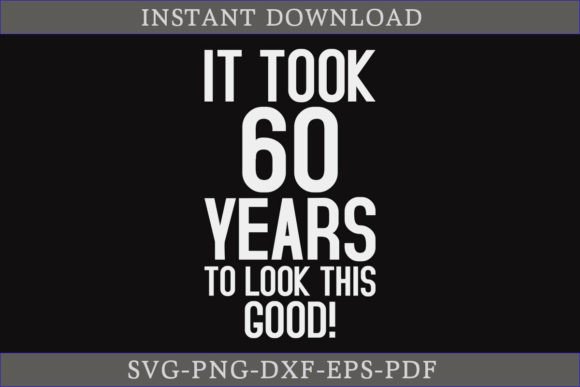
A birthday milestone like the sixtieth deserves a design that carries both humor and genuine heart. When I first opened It Took 60 Years to Look This Good SVG, I was immediately struck by its confident, celebratory mood. This is not a shy little birthday badge. It is a statement piece, built for someone who has earned every bit of that sixty-year pride. The typography has weight, the layout breathes well, and the overall feel is self-assured without tipping into loud. For an embroidery project, that kind of personality translates directly into the finished product. Customers shopping for a sixtieth birthday gift want something that feels personal, a little bold, and unmistakably custom. This design delivers on all three counts.
First Impressions and Design Personality
What stands out immediately is how the phrasing lands. It is playful yet respectful, cheeky but warm. As a designer, I look for elements that will stitch cleanly and still communicate tone after the needle pulls through. The letterforms in It Took 60 Years to Look This Good SVG have enough thickness to support satin stitch or fill stitch without losing readability at smaller sizes. The spacing between characters is generous enough that thread buildup won't blur the edges. That matters enormously when you are moving from a digital proof to a physical product. The mood here is celebratory with a wink, and that works for a wide range of recipients — parents, grandparents, friends, or even a client treating themselves.
From a graphic design perspective, the layout feels balanced. The sixty is naturally the anchor, and the surrounding text frames it without competing. That kind of hierarchy is essential when you are placing the design on a tote bag front, a sweatshirt chest, or a cap crown. The eye knows exactly where to land first, and the message unfolds cleanly from there.
Real Project Performance — The Tote Bag Test
I put It Took 60 Years to Look This Good SVG through a real project recently: a custom embroidered tote bag for a client who wanted a sixtieth birthday gift for her father-in-law. She chose a mid-weight canvas tote in natural cream, and I selected a deep navy thread for strong contrast. The design was digitized from the SVG file, and I used a medium hoop with tear-away stabilizer. The stitching came out crisp. The satin stitch areas held their shape with no gaps, and the fill zones had an even texture that felt substantial to the touch.
The client was thrilled, and more importantly, the tote bag became a talking point at the birthday gathering. That is the power of a design that reads well both on screen and in thread. After several washes, the stitches remained intact with minimal fraying. That kind of durability builds trust with buyers, especially when you are selling handmade products or personalized gifts through an Etsy shop or at a craft fair. People remember when a gift holds up.
Where This Design Shines Brightest
It Took 60 Years to Look This Good SVG is versatile enough for a range of products, but certain applications let it perform at its best.
- Custom apparel — Sweatshirts and t-shirts in cotton or cotton blends give the stitching enough grip to stay clean. The design sits well on the left chest or centered on the back.
- Tote bags and aprons — These flat, stable surfaces allow the lettering to land without distortion. A canvas tote or a work apron makes the design feel useful and personal.
- Embroidered patches — If you want to offer a sew-on or iron-on patch version, the design's layout adapts nicely to patch borders. It becomes a standalone keepsake.
- Pillow covers and kitchen towels — Home goods with a personalized birthday message sell well in small shops. The design adds a handmade touch that buyers appreciate.
- Holiday and birthday gifts — This fits naturally into a June or December gift lineup, but honestly, sixtieth birthdays happen year round, so it is a steady seller.
For Etsy sellers and small business owners, adding this to your birthday collection gives customers a design that feels fresh without being trendy. It is evergreen. You can also use the SVG, EPS, or PNG files for printable mockups, digital product previews, or social media posts that show the finished item before stitching.
Careful Placement Matters
Not every surface is ideal for It Took 60 Years to Look This Good SVG. I always recommend testing before committing to a production run. Some areas require extra attention.
- Small hoop sizes — If your hoop is under four by four inches, you may need to scale the design down, and that can reduce readability on the finer text. Check your machine's minimum size before stitching.
- Textured fabrics — Terry cloth, thick fleece, or heavy sweater knits can absorb thread detail, making the lettering appear softer than intended. Use a firmer stabilizer and test first.
- Stretchy fabrics — Jersey knits and some blends require a cutaway stabilizer to keep the stitches from distorting. The design has areas of moderate density that can pull on stretchy material if not properly stabilized.
- Curved surfaces like caps — The layout is more horizontal than curved, so centering it on a cap crown requires careful hooping. Consider a smaller version for cap fronts.
- Dark fabrics — Dark backgrounds need high-contrast thread colors. A white, silver, or bright gold thread works well. Test a black and white mockup first to confirm visibility.
If you are producing items for a boutique product line or a craft business, these small checks save you from wasting material and time.
Practical Designer Notes Before You Stitch
I have been reviewing embroidery design assets for years, and I always tell fellow makers to treat every new file as a test case until proven otherwise. It Took 60 Years to Look This Good SVG performed well in my trials, but here are the steps I recommend before you sew it onto a finished product.
- Test on scrap fabric first. Use the same fabric type and stabilizer you plan to use for the actual product. This reveals any stitch density issues early.
- Check thread color contrast. Hold your thread next to the fabric in natural light. If the contrast feels weak at arm's length, choose a different color or fabric.
- Review stitch density. The design has areas that are denser than others. If your machine struggles with dense stitching, reduce the density in your software or choose a lighter stabilizer.
- Confirm hoop size. The design fits into a medium hoop, but measure the exact dimensions from the SVG or EPS file before hooping. Do not assume it will fit a mini hoop.
- Inspect small details. Zoom into the file on your screen. The finer lettering should be clear. If any strokes look fragile, test them at actual stitch size.
- Test in black and white. Print a grayscale version of the PNG to see how the design reads without color. This helps you evaluate layout balance.
- Verify licensing. The files come in SVG, DXF, EPS, PNG, and PDF formats inside a zip archive. Before selling finished items or using the design commercially, confirm that your license covers commercial embroidery, digital product sales, or both. Licensing terms vary by seller, so read the included documentation or the product page carefully.
These steps apply whether you are stitching for a personal gift or building inventory for your small shop. They prevent costly mistakes and ensure every finished product meets your quality standards.
Why Visual Appeal and Customer Trust Go Hand in Hand
A design like It Took 60 Years to Look This Good SVG does more than decorate a product. It signals to the buyer that you care about presentation. When a customer receives a tote bag or a sweatshirt with clean, even stitching and a message that lands well, they associate that quality with your brand. That is especially important for Etsy sellers, handmade shop owners, and creative entrepreneurs who rely on repeat business and word of mouth.
The design's visual personality also makes it highly giftable. People shopping for a sixtieth birthday often feel pressure to find something unique. A custom embroidered item with a clever, warm message removes that anxiety. They know the recipient will smile. That emotional connection drives purchases and builds loyalty to your shop.
For apparel decorators and commercial embroidery businesses, offering this design as part of a birthday collection gives clients a reason to return when the next milestone comes around. It becomes a reliable asset in your catalog.
Bringing It Into Your Workflow
Whether you are a hobbyist stitching a gift for a family member or a digital product seller creating mockups for your store, It Took 60 Years to Look This Good SVG fits naturally into a Craft project workflow. The file formats give you flexibility: SVG for editing, EPS for vector work, PNG for previews, and PDF for printing. That range is useful whether you are preparing a machine embroidery file or designing a printable mockup for your product listing.
I have seen too many designs that look promising on screen but fail under the needle. This one holds up. It respects the limitations of thread and fabric while keeping the humor and warmth that make birthday gifts memorable. If you are building out a birthday collection or need a dependable design for a custom order, put this one on your shortlist. Test it on a few fabric types, dial in your thread colors, and watch how it transforms a simple tote bag or sweatshirt into a meaningful keepsake.
That is the kind of design asset that keeps customers coming back. And in this business, that is worth celebrating.