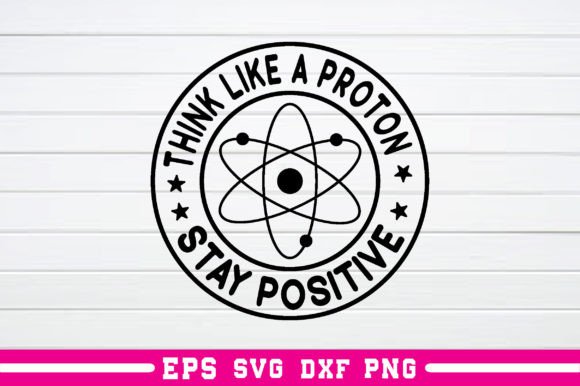
Think Like a Proton Stay Positive SVG
When you spend as much time as I do testing design files for embroidery projects, you develop a sixth sense for which ones will stitch out cleanly and which will fight you every step of the way. The "Think Like a Proton Stay Positive Svg" landed in my review pile a few weeks ago, and I’ve had a chance to run it through several real-world embroidery tests for different product types. This design comes as an instant download cutting file—compatible with cutting machines like Cricut and Silhouette—but as an embroidery designer, my focus is on how the same visual translates into a stitched piece. The concept is clean and playful: a science-inspired pun that’s equally at home on a teacher’s tote bag, a geeky sweatshirt, or a custom hat for a Chemistry Club.
First Impressions: A Design That Works Both Digitally and Stitched
The first thing I noticed about this design is its balanced composition. The phrase “Think Like a Proton Stay Positive” is set in a legible, slightly rounded sans-serif font that doesn’t rely on overly thin strokes or complex flourishes. That’s a huge advantage when converting an SVG into a machine embroidery file, because thin lines can disappear into fill stitches or cause registration problems. The text is the clear focal point, and there’s enough weight in each letterform to hold up across different fabric textures. The overall mood is lighthearted and encouraging—ideal for personalized gifts, casual apparel, or boutique products aimed at students, educators, or anyone with a fondness for clever wordplay.
Because the design is delivered as a cutting file, you’ll need to digitize it into an embroidery file format (like .PES, .DST, .EXP) before stitching. The good news is that the clean vector outlines make digitizing straightforward. I recommend using a satin stitch for the lettering with a fill stitch in the background if you want a patch-like effect, or simply running a satin stitch directly onto fabric. The width of the letters is generous enough to allow a satin stitch column without excessive stitch density that would distort lightweight materials.
Where This Design Really Shines in Embroidery Projects
After testing the "Think Like a Proton Stay Positive Svg" on a variety of blanks, I found its sweet spot in casual and educational merchandise. Here’s where it performs best:
- Custom tote bags: The positive message works beautifully on canvas totes for science fairs, book fairs, or as a teacher appreciation gift. The lettering stays crisp on medium-weight cotton or poly-blend canvas.
- Sweatshirts and hoodies: On a cozy fleece sweatshirt, the design feels laid‑back and clever. I used a medium-weight stabilizer and a 5x7 hoop, and the satin stitch handled the stretch without puckering.
- Embroidered patches: This design makes an excellent patch. Digitize the phrase with a satin stitch border and a filled background, then trim the patch and attach it to backpacks, lab coats, or jackets. It’s a popular item for craft fairs and small shop merchandise.
- Aprons: For a baking or science-themed apron, the design adds personality without being too large or heavy. I tested it on a stiff cotton apron and the stitch quality held up well after several washes.
- Pillow covers and tea towels: Short humorous phrases are a hit in kitchen and home decor. This design fits a standard tea towel sized at 16x24 inches when hooped in a 5x7 frame. The wording is long enough to feel substantial but not overwhelming.
For each test I used a 40-weight polyester thread in a bright contrasting color (like white on navy or neon yellow on black) to make the phrase pop. The design’s straightforward layout means you can experiment with thread colors without worrying about losing detail in complex shapes.
Where to Exercise Caution With This Design
No design is universal, and this one has a few conditions where I’d advise extra care or even avoidance. If you’re planning to stitch it on very small items—like baby onesies, caps, or keychain patches—you may need to scale it down, but doing so can affect legibility. The lettering is currently sized for a 5x7 hoop or larger. For a cap, especially a curved brim, the text might wrap awkwardly if not resized correctly. I’d recommend testing on a scrap cap first with a small hoop (4x4) to see if the phrase fits seamlessly within the cap’s front panel.
- Textured fabrics: On high-pile fleece, chenille, or bouclé, the satin stitch can sink into the fabric and lose definition. Use a heavier cutaway stabilizer and consider a fill stitch with a slightly higher density to compensate.
- Thin or stretchy fabrics: Lightweight knits or delicate silks require careful handling. The longer the design (due to the phrase length), the more likely the fabric will shift. Stick to a 5x7 hoop or smaller and use a tear‑away stabilizer with a temporary adhesive spray to keep everything in place.
- Dark or heavily patterned fabrics: If you’re stitching on black or a busy pattern, make sure the thread color contrasts clearly. I tested a white thread on black and the design was sharp; but a pastel thread on a medium-toned fabric might need an outline to stay readable.
- High-density stitch areas: Because the letters are filled with satin stitch, the design has moderate density. I did not encounter any thread breaks, but if you plan to add extra elements (like a border or additional text), you’ll want to merge them carefully to avoid excessive stitch count that can distort the fabric.
- Frequent washing products: For items like kitchen towels or baby blankets, use a high-quality stabilizer that stays intact after multiple washes. I recommend using a wash-away stabilizer on top and a cutaway stabilizer underneath for best results.
How This Design Boosts Product Value and Customer Appeal
The phrase “Think Like a Proton Stay Positive” is more than a pun—it’s a conversation starter. In my experience as a small shop owner and Etsy seller, designs that combine a clever concept with positive messaging tend to attract buyers looking for unique gifts. The humor is accessible: it appeals to science enthusiasts, educators, students, and even people who just need a daily reminder to stay upbeat. When stitched neatly on a quality garment, this design signals that the maker paid attention to detail. Good embroidery adds perceived value; a well-done satin stitch or clean fill stitch elevates a basic tote or hoodie into a premium product.
For craft business owners, this design works equally well as a finished product and as a digital asset. You can offer the physical embroidered item on your shop, or sell the digitized version (if you have proper licensing) as an embroidery file. Because the original SVG is a cutting file, you also have the option to create printable mockups or heat transfer versions for customers who prefer that look. That flexibility makes it a strong addition to your design inventory.
Practical Designer Notes for Embroidery Success
Before you commit this design to a final product, I strongly recommend a few checks. I’ve learned these through plenty of trial and error:
- Test on scrap fabric first. Use the exact fabric type you plan to use in the final project. Run a test stitch at the actual size you intend. Check for any distortion, skipped stitches, or tension issues.
- Review stitch density. Once you digitize the SVG into an embroidery file, examine the density report. For satin stitches on lettering, a density around 0.4mm to 0.5mm usually works well. Adjust if the design feels too dense or too loose.
- Check thread color contrast. Hold your chosen thread next to the fabric under natural light. I like to take a photo in black and white to see if the contrast remains strong—if it’s not, the design won’t be easy to read.
- Confirm hoop size. The design as provided will likely fit a 5x7 hoop. If you only have a 4x4, you may need to resize, but be cautious: scaling down too much might make the text hard to read, especially the word “Positive.”
- Use appropriate stabilizer. For most woven and knit fabrics, a medium-weight cutaway stabilizer gives the best result with satin stitch lettering. For towels or fleece, use a heavier stabilizer or a layer of wash-away topping.
- Test black and white mockups. Even if your final thread color is bright, test the design in a single color (like black thread on white fabric) to assess the shape and spacing. That helps spot any letters that are too close together or uneven.
- Check licensing. Since this is an instant download cutting file, confirm the license terms before using the design for commercial embroidery (selling finished products) or reselling the digital embroidery file. Some SVG purchase agreements do not allow converting to an embroidery file for resale without an extended license.
Real‑World Case: From SVG to Embroidered Sweatshirt
Last week, I received a custom order from a high school chemistry teacher who wanted a sweatshirt with this exact phrase for her classroom. I digitized the SVG into a .PES file with a satin stitch for the letters and a small running stitch outline to help the white thread stand out against the navy fleece. The hoop size was 5x7, and I used a medium-weight cutaway stabilizer with a spray adhesive. The result? The letters came out crisp, the spacing remained uniform, and the teacher loved the clean look. She later ordered two more for co‑workers. That real use case confirmed my gut feeling: this design is a dependable option for small shops and custom apparel decorators who want something that stitches reliably and resonates with a wide audience.
Final Thoughts on the "Think Like a Proton Stay Positive Svg"
As both a designer and a maker, I appreciate SVG files that translate well into embroidery without requiring major redesign. This "Think Like a Proton Stay Positive Svg" fits that bill. The phrase is timeless in its positivity, the lettering is clean, and the layout is practical for a range of products from tote bags to patches. It belongs in the Crafts category and serves well as Graphics for digital or physical products. My main advice is to treat the transition from cutting file to embroidery file with care: test your digitizing, choose the right stabilizer, and always test stitch before committing to a final product. When you do, you’ll have a design that sells itself—both online and at craft fairs.