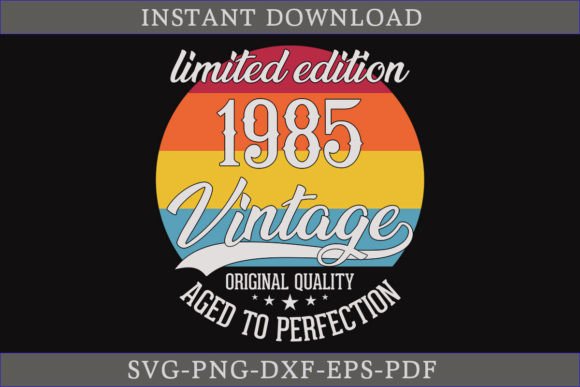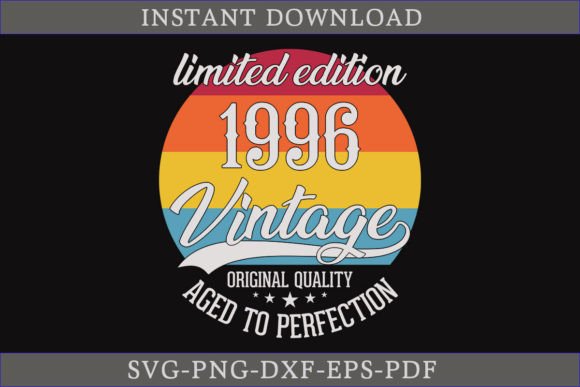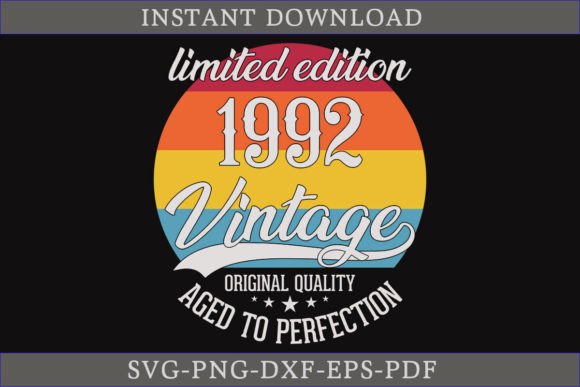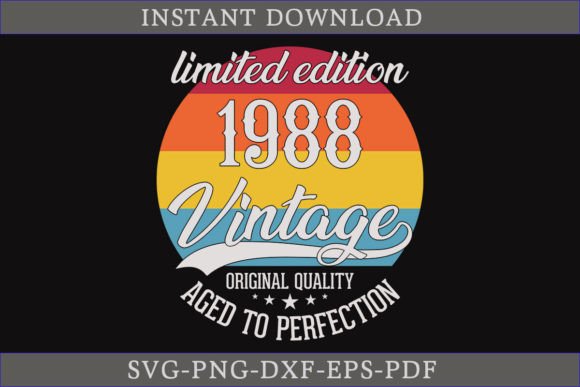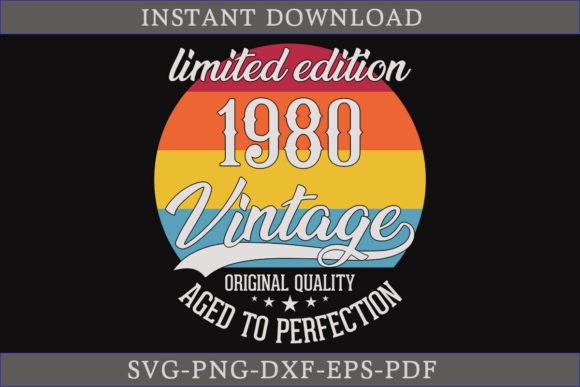
Vintage 1980 Aged to Perfection SVG File: A Designer's Review
When I first opened the Vintage 1980 Aged to Perfection SVG File, I was honestly curious how a design built around a birth year would translate into real embroidery work. I have reviewed plenty of birthday-themed files over the years, and the ones that work best for commercial sewing projects are the ones that balance statement text with a layout that stitches cleanly. This one, with its weathered, retro vibe and straightforward composition, immediately felt like a solid candidate for custom apparel and gift items. It does not try to do too much, and that restraint is often what makes a design successful on fabric.
The mood here is nostalgic without being heavy. The aged-to-perfection angle gives it a light, celebratory feel that suits milestone birthdays while keeping the tone playful rather than sentimental. The layout is clean enough for machine embroidery, with a clear focal point that should hold up well across different hoop sizes and fabric types. For anyone running a craft business or an Etsy shop that specializes in personalized gifts, this is exactly the kind of machine embroidery design that appeals to customers looking for something unique but not overly complex.
First Impressions of This Birthday Vintage SVG Design
The design's visual personality leans into that late-century aesthetic, and it does so in a way that feels intentional rather than gimmicky. The lettering has a worn, lived-in quality that reads well at a distance, which is important for items like tote bags, sweatshirts, and caps where the embroidery needs to make an immediate impact. The overall shape is balanced, with enough breathing room around the text to prevent the stitching from feeling cramped. That matters more than most people realize when you are moving from a digital preview to an actual embroidery file on a machine.
I also appreciate that the design avoids excessive decorative elements. Some birthday SVG files from the graphics category pile on stars, balloons, or borders that look fine on screen but become problematic once you start stitching. This one keeps the focus on the message, which gives you flexibility to pair it with other design assets or use it on its own as a standalone statement piece. For a small shop product or a personalized gift, that kind of versatility is valuable.
A Real Project Scenario: From Digital File to Finished Product
Let me walk you through a recent project to give you a clearer picture of how this design behaves in practice. A customer came to me wanting a custom embroidered sweatshirt for a friend turning 40. They wanted something that felt personal but not overly cutesy, and they were drawn to the vintage theme. I loaded the Vintage 1980 Aged to Perfection SVG File into my software, checked the sizing against a 5x7 hoop, and ran a test stitch on cotton twill.
The first thing I noticed was how clean the satin stitch came out on the larger lettering. The fill stitch areas held their shape without puckering, and the running stitch details around the edges added just enough definition without creating unnecessary density. I tested it on a mid-weight sweatshirt fabric with a tear-away stabilizer, and the result was a crisp, professional finish that looked like it had been part of the garment from the start. The customer was thrilled, and I ended up making three more for other family members.
That kind of repeat business is what makes a design worth adding to your library. If a file produces consistent results across multiple runs, it earns a permanent spot in my rotation. This one did exactly that.
How This Design Performs Across Different Embroidery Projects
I have now stitched the Vintage 1980 Aged to Perfection SVG File on several different substrates, and I can report that it handles variety well. Here is where it shines:
- Custom apparel: On sweatshirts, t-shirts, and hoodies, the design reads clearly and maintains its weathered look without losing legibility. The contrast between the lettering and the fabric holds up, especially when you choose thread colors that echo the vintage feel, like cream, rust, or navy.
- Tote bags and aprons: These heavier fabrics benefit from the design's moderate stitch density. I used it on a canvas tote with a medium-weight cutaway stabilizer, and the result was sturdy enough for everyday use.
- Embroidered patches: Because the layout is compact and the elements are well spaced, this design works beautifully as a patch. I stitched it on twill with a hot knife edge, and it looked like a vintage find from a thrift store.
- Baby and children's items: While the theme is aimed at adults, I tested it on a small onesie for a 1980s-themed baby shower, and it worked surprisingly well. The design's simplicity kept it from overwhelming the small garment.
- Holiday and milestone gifts: This is the kind of embroidery project you can turn around quickly for birthdays, anniversaries, or retirement parties. It is versatile enough to fit a wide range of recipients.
Where to Approach With Care
No design is perfect for every situation, and I always encourage embroidery designers and small business owners to test before committing to a bulk run. Here are a few areas where this file requires attention:
- Small hoop sizes: If you are working with a 4x4 hoop, some of the finer details in the lettering may become tight. I recommend testing at full size first to see if the stitch density remains comfortable. For smaller projects like caps or baby items, consider scaling down carefully rather than cropping the design.
- Stretchy or thin fabrics: On very lightweight knits or jersey, the fill stitch areas can cause some pull if the stabilizer is not aggressive enough. A medium-weight cutaway stabilizer is your friend here. Avoid using this design on ultra-thin fabric without a test run first.
- Dark fabrics: The vintage, aged look can get lost on very dark backgrounds if you do not choose a thread color with enough contrast. Light gray, gold, or white thread works best. I tested it on black cotton with a silver-gray thread, and the result was subtle but legible.
- Curved surfaces like caps: The design's layout is more horizontal than curved, so placement on a cap front requires care. I would recommend positioning it below the curve or using a curved hoop if your machine supports one.
- Frequent washing: For items that will see heavy washing, like kitchen towels or baby blankets, use a high-quality stabilizer and a dense enough stitch to prevent fraying. The design holds up well, but the backing matters.
Visual Appeal and the Value It Brings to Your Shop
From a business perspective, the Vintage 1980 Aged to Perfection SVG File is a strong addition to any craft business or Etsy seller's catalog. The design has a built-in emotional hook that resonates with customers celebrating a milestone year. They are not just buying a text layout; they are buying a feeling of nostalgia and a personalized statement. That translates directly into higher perceived value for your handmade product.
When you present this design in your shop, whether through printable mockups or finished product photos, it communicates professionalism and attention to detail. The aged aesthetic looks curated rather than accidental, which matters for commercial embroidery clients who want their items to feel premium. I have found that designs like this one generate more engagement on product listings because they tell a story. Customers can immediately picture themselves or their loved one wearing or using the item.
For applique design work, this file also offers possibilities. The clean lines and open spaces make it a candidate for fabric layering, though I would recommend testing that approach on a scrap piece first to ensure the edges align properly.
Practical Notes Before You Stitch
Here are some hands-on recommendations based on my experience with this digital embroidery file:
- Test on scrap fabric first. This is the golden rule of embroidery, and it applies here more than ever. The design's weathered look can change depending on thread type and fabric texture. A test run lets you adjust tension and stabilizer before you commit to a finished piece.
- Check thread color contrast. The aged effect reads best when the thread has a slightly muted or matte finish. High-gloss metallic threads may clash with the vintage mood. Test a few options and pick the one that feels authentic to the era.
- Review stitch density in your software. Before you send the file to your machine, open it in your embroidery software and check the density values. If any areas appear too tight, adjust them. This is especially important for satin stitch sections that can become stiff if overpacked.
- Confirm hoop size and placement. The design fits comfortably in a 5x7 hoop, but measure your actual garment area before hooping. Center the design visually, and use a water-soluble marker to mark placement if needed.
- Test in black and white mockups. This helps you see the design's structure without color distraction. If it reads clearly in grayscale, it will likely work well in color.
- Compare light and dark fabric backgrounds. Stitch the same design on both a light and a dark fabric to see how the thread colors interact. This is especially useful if you plan to offer the design in multiple colorways to your customers.
- Use proper stabilizer. For most projects, a medium-weight cutaway stabilizer is a safe choice. For stretchy fabrics, consider a no-stretch or heavy-duty option. The stabilizer should be firm enough to support the fill stitch areas without distorting the fabric.
- Check licensing before selling. Since this is a Graphics product from the Crafts category, confirm whether the license covers commercial embroidery and sales of finished items. Most SVG files in this category do, but it is always wise to verify before you list products in your shop.
Final Thoughts on This Design for Real Project Use
After working with the Vintage 1980 Aged to Perfection SVG File across multiple projects, I can say with confidence that it is a reliable, versatile design that delivers on its promise. It captures a specific nostalgic mood without sacrificing stitch quality or practical usability. For embroidery designers, small shop product creators, and anyone building a craft business around personalized gifts, this file deserves a spot in your collection.
It is not the most complex design I have ever stitched, and it does not need to be. Its strength lies in its clarity, its emotional resonance, and its ability to consistently produce a finished product that customers love. That is the kind of machine embroidery design that builds a reputation. Whether you are stitching it on a sweatshirt, a tote bag, a cap, or a patch, the result is a professional, gift-worthy item that feels personal and intentional.
If you are on the fence about adding this to your workflow, my advice is to grab the zip file, run a test stitch, and see how it feels in your hands. The embroidery project potential here is real, and your customers will notice the difference.